- January 27, 2026
- Metal Buildings
- Carports Advisor
Barn Roof Collapses Don’t Happen Suddenly – The Warning Signs Are Clear
When a barn roof collapses, it often feels sudden and shocking. One day everything looks fine, and the next day there is serious damage, loss of animals, or destroyed equipment. But here’s the truth most people don’t realize: barn roof collapses almost never happen overnight.
Reality, there are always warning signs. They start small, barely noticeable, and grow worse over time. Understanding these signs, along with knowing your barn type and roof style, can help you take action before a disaster happens. We are going to walk you through the types of steel barns, roof styles, clear warning signs, and proactive steps you can take to protect your structure and everything inside it.
Types of Barns and Roof Styles
Before spotting problems, it’s important to understand what kind of barn you own. Different barn types and roof styles behave differently under stress, weather, and load. Knowing this also helps you understand the detailed anatomy of frame, truss, girt, which directly affects roof strength.
1. Seneca Barn
Seneca barns are known for their raised center and classic look. They offer good airflow and extra overhead space, which is helpful for storage and livestock. However, if the roof framing is not properly maintained, weight from snow or debris can slowly weaken the trusses over time.
2. Livestock Barn
Livestock barns deal with constant moisture, ammonia, and temperature changes. Over time, these conditions can weaken connections and fasteners. If ignored, the roof structure may lose strength, especially in areas where animals generate heat and humidity.
3. Carolina Barn
Carolina barns have three units; the middle one is the tallest and has a strong visual appeal. Their larger roof span means weight distribution is critical. Any imbalance, corrosion, or framing shift can put extra pressure on the roof system.
4. Metal Hay Barn
Metal hay barns store large volumes of dry material. While steel helps with durability, improper ventilation or excessive roof load from stacked hay can strain roof components if not properly designed or maintained.
Roof Styles of Barns
Roof design plays a huge role in how well a barn handles weight, wind, and weather. Some styles perform better in harsh conditions than others.
- Regular Style Roof
This roof has rounded edges and a simple look. It’s affordable but can allow snow and debris to pile up if not cleared regularly, adding stress to the roof frame.
- Boxed Eave Style
Boxed eave roofs offer a cleaner appearance and better edge protection. However, if drainage is poor, water buildup can slowly weaken roof components.
- Vertical Roof
Vertical roofs are the strongest option. They allow snow, rain, and debris to slide off easily, improving performance in extreme weather. This design reduces long-term roof stress and lowers the risk of collapse. Understanding your barn and roof type makes it easier to spot danger early. Now, let’s talk about the warning signs you should never ignore.
10 Warning Signs Your Barn Is Going to Collapse
Barn roofs don’t fail without warning; they communicate long before they collapse. The problem is that these signals are often subtle, easy to ignore, or mistaken for normal wear and tear. What starts as a small change can quickly turn into a serious structural risk if left unchecked. Knowing what to look for gives you the power to act early and prevent costly damage. Below are the most common warning signs your barn shows when a collapse is approaching.
1. Sagging Roof Lines
A sagging roof is one of the loudest silent warnings your barn will ever give. What looks like a slight dip today can turn into a major structural failure tomorrow. This usually means the trusses are bending under more weight than they were designed to handle. Snow load, debris, or years of stress slowly pull the roof downward. Once sagging starts, the structural balance is already compromised. Ignoring it is like ignoring a cracked bone and hoping it heals on its own.
2. Cracks Near Joints or Connections
Cracks around joints are not just cosmetic flaws; they are stress signals. These areas hold the roof system together, and cracks mean pressure is no longer distributed evenly. Over time, small cracks widen and weaken nearby components. Temperature changes and wind loads make this damage spread faster than expected. If joints fail, the roof can lose its ability to support itself. This is often how slow damage turns into sudden collapse.
3. Loose or Missing Fasteners
Fasteners are small, but their role is massive. When bolts or screws loosen or go missing, the roof structure begins acting independently rather than as a system. Wind vibrations and daily movement worsen the problem over time. One loose fastener often leads to nearby fasteners failing. Eventually, panels shift, and trusses lose alignment. At that point, the roof is holding on by chance, not strength.
4. Rust or Corrosion on Steel Parts
Rust doesn’t just look bad; it quietly eats away at strength. Corrosion weakens steel components from the inside out, reducing their load-bearing capacity. This directly impacts the truth about metal building lifespans, which depend heavily on maintenance. Rust around trusses, girders, or connection points is especially dangerous. Once corrosion sets in, structural integrity drops faster than most owners expect. What seems stable today may already be fragile beneath the surface.
5. Doors or Windows No Longer Align
When doors stick, or windows don’t close properly, the problem often isn’t the door; it’s the structure. Misalignment usually means the frame has shifted under stress. This shift affects the detailed anatomy of the frame, truss, and girt, signaling uneven load distribution. Structural movement rarely stops on its own. Instead, it slowly worsens with every storm and seasonal change. By the time alignment issues become obvious, the roof has already been under stress for some time.
6. Creaking, Popping, or Groaning Sounds
Barns do make noise, but certain sounds should never be ignored. Loud creaks, pops, or groans often mean components are moving under pressure. These sounds usually occur when loads increase, such as during heavy wind or snow. It’s the structure struggling to adjust in real time. Think of it as the barn warning you before it gives up. Silence after these sounds can sometimes mean damage has already occurred.
7. Water Leaks During Rain
Water leaks are more than an inconvenience; they are structural warnings. Leaks often appear where roof panels have shifted or seams have weakened. Over time, moisture damages connections and speeds up corrosion. Water intrusion also adds hidden weight to insulation and framing. Each storm makes the problem worse, not better. A leaking roof is often a failing roof in slow motion.
8. Visible Bending in Trusses or Girders
Trusses and girders are designed to stay straight under load. If you see bending, the structure is already beyond its comfort zone. This usually means the roof is carrying more weight than intended. Snow accumulation and improper design loads are common causes. Bent components rarely return to their original shape. Once bending starts, the collapse risk increases sharply.
9. Heavy Snow or Debris Sitting on the Roof
A roof covered in snow or debris may look calm, but it’s under extreme stress. Weight builds gradually, giving a false sense of safety. Steel structures are strong, but every roof has limits. When those limits are crossed, failure happens fast. This directly affects performance in extreme weather, especially in winter. Clearing the roof late is often clearing it too late.
10. Old Storm Damage That Was Never Repaired
Storm damage doesn’t disappear just because the storm has passed. Small dents, shifted panels, or loosened fasteners weaken the structure over the long term. Each new storm builds on old damage. Over time, these weak points become failure points. Many collapses trace back to ignored storm repairs. What was once minor damage becomes the final trigger.
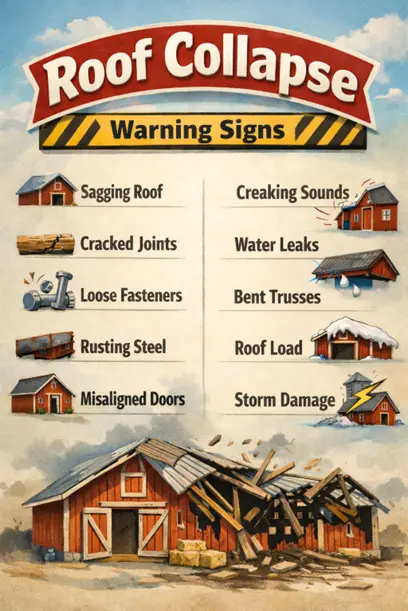
Top 10 warning signs of roof collapse
How to Stop the Collapsing of the Barn Roof (Proactive Steps)
The good news is that most roof collapses are preventable. Taking proactive steps protects your investment and keeps people, animals, and equipment safe.
1. Schedule Regular Structural Inspections
Inspections help you understand the condition of the frame, truss, and girt before problems escalate. A professional inspection can uncover hidden stress points and load issues early.
2. Manage Roof Load Year-Round
Clear snow, leaves, and debris regularly. Avoid storing heavy materials that add unnecessary roof pressure. Proper load management improves long-term performance.
3. Work With the Best Metal Building Dealer
Choosing the right dealer makes all the difference. A reliable dealer will answer all the critical questions you have to ask about design load, weather ratings, materials, and maintenance. They also ensure your prefab barn building is built to handle local climate conditions and future use. A trusted metal building dealer helps you plan for durability, not just installation.
Your Barn Warns You Before It Fails – Are You Listening?
Barn roof collapses are not random accidents. They are the final result of ignored signs, delayed maintenance, and missed opportunities to act early. When you understand your barn type, roof style, and structural behavior, you gain the power to prevent costly damage. For this, pay attention to small changes. Ask the right questions. Respect how your barn performs under stress and adverse weather conditions.
When you do, your barn doesn’t just stand; it lasts long, sometimes more than 50 years. Because a strong barn roof is not about luck, it’s about awareness, preparation, and timely action. Do you have any questions about the durability of a metal barn? Connect with experts at (336)-914-1654 for a genuine, detailed conversation.
 (336)-914-1654