- February 17, 2026
- Metal Buildings
- Carports Advisor
This One Carport Choice Determines Whether It Survives High Winds
After a strong storm passes, you often notice a strange scene. One carport is standing exactly where it was built. Another one, just a few houses away, is twisted, damaged, or completely gone. Have you ever experienced such a thing? You might not, but it happens when both carports are built differently. Initially, both looked strong before the storm. Both were made of steel. And both were built to protect vehicles.
So what made the difference?
It usually comes down to one simple design choice that most buyers never think about. A choice that determines whether a carport stays grounded or becomes airborne when the wind picks up.
Let’s break it down in a clear and easy way. So, you don’t make a mistake while buying a metal carport.
Why High Winds are A Real Threat to Carports
As we all know, carports are open structures, which makes them more exposed to wind than enclosed buildings. When a storm hits, wind doesn’t just push against the sides. It flows over the roof, under the roof, and around the support columns simultaneously. This creates pressure from multiple directions. If the structure is not designed to allow air to move freely, the pressure builds up and starts lifting the roof like a wing. Once uplift begins, even heavy steel frames can shift or fail.
This is why high winds are one of the biggest threats to any steel carport, especially in open areas, coastal regions, or storm-prone zones. Now that we understand the danger, let’s talk about why some carports fail even when they look strong.
Why Some Carports Fail Even When They Look Strong
At first glance, many carports look tough. It is because thick steel posts, wide roofs, and heavy frames give a feeling of strength. But strength alone does not guarantee wind resistance. It is because wind does not fight steel. It fights shape.
If the structure traps air instead of releasing it, pressure builds. That pressure pushes upward and sideways at the same time. Even well-anchored carports can struggle when air gets trapped under the roof.
This is why many people are shocked when their carport fails while the building next to it remains untouched. The problem is not always the material. It’s often the design. To better understand this, you need to look at how wind actually moves around a carport.
How Wind Actually Moves Around A Carport
Wind is not just a strong push. It behaves like flowing water. It looks for gaps, edges, and open spaces to move through. When it hits a flat surface, it spreads and lifts. A prefab carport roof acts like a wing when wind flows under it. As air moves faster over the top and slower underneath, pressure changes occur. This pressure difference creates lift, the same force that helps airplanes take off.
If air gets trapped underneath the roof, the pressure becomes even stronger. This is when roofs bend, frames twist, and fasteners fail. That’s why airflow control is one of the most important parts of carport design. And this is where the small design choice begins to matter.
The Small Design Choice That Makes A Big Difference
Most buyers focus on size, height, and price. Very few think about roof orientation, but roof orientation controls how wind flows across the structure.
There are three common carports based on roof styles:
- Regular roof carport
- Horizontal roof carport
- Vertical roof carport
At first glance, they look similar. But when the wind hits, they behave very differently.
Horizontal roofs tend to trap air, and vertical roofs guide air. This difference may not be visible on a sunny day, but during a storm, it becomes critical. Then, which one is the best choice to deal with high winds?
The One Choice That Survives High Winds
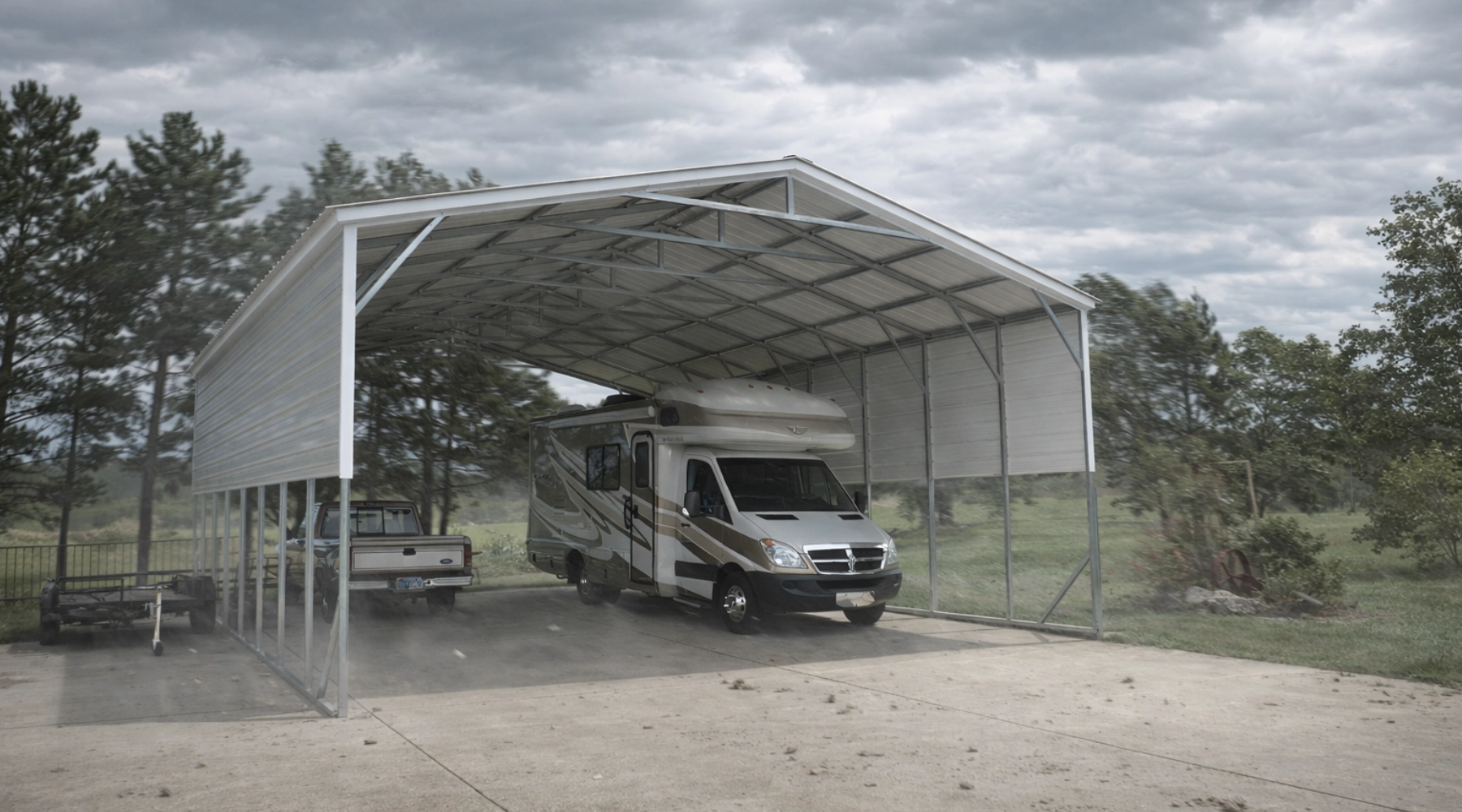
The design that consistently performs better in high-wind conditions is the vertical roof metal carport. This roof style allows wind to flow naturally along the panels instead of pushing against them. The vertical ridges guide wind upward and away from the structure. At the same time, rain, snow, and debris slide off easily, preventing buildup that can add weight and stress.
Why Vertical Roof Metal Carports Handle Wind Better?
It is because vertical roofs are engineered for airflow. Instead of creating a flat surface that wind can lift, the vertical panels break up the air pressure and reduce the uplift force.
When wind flows across a vertical roof:
- It moves smoothly over the ridges
- It does not get trapped underneath
- It reduces pressure on the center of the roof
This is why vertical roofs are often recommended in high-wind and snow-prone regions. While horizontal roofs may cost less, they are more vulnerable to uplift because air has nowhere to escape. Let’s understand this metal building in more detail, how it protects your property from high winds, and the many other benefits it offers.
Vertical Roof Metal Carport: Why It’s the Best Choice?
A vertical roof metal carport is not just a design upgrade. It is a smart structural choice for anyone who wants long-term protection, better performance in bad weather, and fewer maintenance problems. Let’s break down exactly why this type of carport is considered the strongest and most reliable option.
1. Designed to Work With the Wind, Not Against It
The biggest advantage of a vertical roof metal carport is how it handles wind. When strong winds hit a flat or horizontal roof, air gets trapped underneath and creates lifting pressure. This pressure is what causes many carports to bend, shift, or even lift off the ground during storms.
A vertical roof is shaped in a way that allows wind to move smoothly over the roof panels. The air follows the ridges instead of pushing against a flat surface. This reduces uplift force and keeps pressure from building under the roof.
2. Better Protection From Rain and Snow
Vertical roof panels are designed so that water and snow slide straight down instead of collecting on the roof. This prevents puddles from forming and stops snow from building up and adding extra weight. When heavy rain or snow sits on a roof, it increases stress on the frame and can lead to long-term damage. With a vertical roof, gravity does the work. Rainwater drains quickly, and snow slides off naturally. This keeps the roof lighter, reduces pressure on the steel frame, and prevents leaks or rust caused by standing water.
3. Stronger Framing and Better Load Distribution
Vertical roof metal carports are built with extra framing along the roof line. This added support makes the structure more rigid and stable. Instead of all the wind pressure pushing on one section, the load is spread evenly across the frame. This even distribution of force helps prevent twisting, bending, and loosening of joints over time. The result is a carport that remains solid and secure even in strong winds.
4. Less Rust, Less Debris, and Lower Maintenance
Leaves, dust, dirt, and branches easily slide off a vertical roof. On flat or boxed roofs, debris tends to sit and trap moisture. Over time, trapped moisture leads to rust and corrosion. Because vertical roofs stay cleaner and drier, the steel remains in better condition. This reduces maintenance needs and helps the carport last longer without frequent repairs or repainting.
5. Better Heat Control and Ventilation
Vertical roof panels also help with airflow. Hot air rises and escapes more easily, which helps reduce heat buildup under the roof. This is especially important if you store vehicles, boats, or equipment under the carport. Less trapped heat means better protection for paint, tires, and mechanical parts. It also makes working under the carport more comfortable during hot weather.
6. Long-Term Value and Peace of Mind
While Vertical roof metal carports may cost a little more upfront, they save money in the long run. Fewer repairs, less storm damage, and lower maintenance costs make them a smarter investment. Most importantly, they provide peace of mind. When strong winds or heavy storms arrive, you know your structure is built to handle it. You’re not worrying about twisted panels or collapsed roofs.
So, Why It’s the Best Choice Overall
A vertical roof metal carport offers better wind resistance, stronger framing, better water control, less rust, improved airflow, and a longer lifespan. It is built to survive real-world conditions, not just look good on paper. If durability and protection matter to you, this design is simply the best choice. These are the main reasons why it’s an effective carport choice.
But why roof matter so much?
Why Roof Design Matters More Than Most People Think
So, a carport is not just a roof on posts. It is an aerodynamic structure that interacts with moving air. Here is what a roof choice does to a structure:
- The wrong roof traps wind.
- The right roof guides wind.
- The wrong roof lifts.
- The right roof stays grounded.
This is why roof orientation is one of the most important design decisions you can make.
It affects:
- Wind resistance
- Rain and snow drainage
- Long-term structural stress
- Maintenance needs
Test Your Carport with the Best Partners
So, now you know that high winds don’t care about how a carport looks. They test how it’s built. And as you have learned, the right design choice can mean the difference between a structure that stands strong and one that doesn’t survive the storm. Our team at Carports Advisor offers strong metal carports. You can explore the website and find the best structure for yourself. If you can’t decide what is the best for you, contact our experts at (336)-914-1654. They will help you from choosing the structure, to designing and ordering it.
They will help you understand what actually works in real-world conditions. From vertical roof metal carports to metal boat carports and carports with storage, our team’s expertise ensures you get a structure built for strength, airflow, and long-term protection. Because when it comes to metal buildings, the smartest choice is not just buying one, it’s choosing the right one and that’s exactly what we help you do.
 (336)-914-1654