- March 3, 2026
- Metal Garages
- Carports Advisor
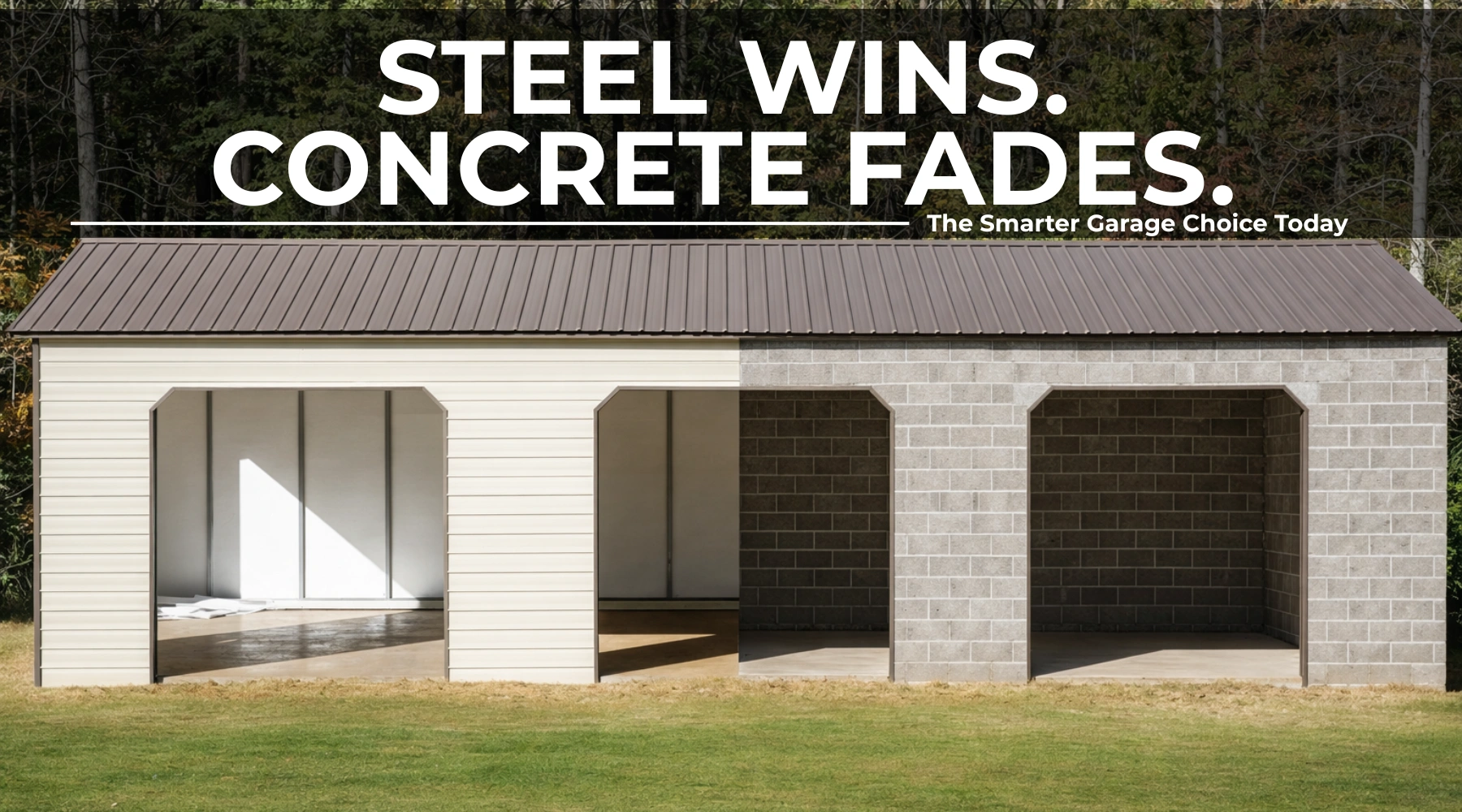
The Real Reason Steel Garages Are Replacing Concrete Block Garages
For decades, concrete block garages were seen as the “strong and permanent” option. Many homeowners believed that if you wanted durability, you had to build with concrete. But that mindset is changing fast.
Today, more property owners are choosing steel garages instead. The shift is not just about trends. It’s about cost, speed, flexibility, and long-term value. Let’s understand what is really driving this replacement.
How Steel Garage is Different from Concrete Block Garage
A concrete block garage is built using masonry blocks, cement, sand, and heavy labor. It requires a strong foundation, a longer construction time, and skilled masons. Once built, it is solid and permanent, but changes or modifications later can be difficult and expensive. Construction also depends heavily on weather conditions.
On the other hand, metal garages are made from prefabricated steel components that are manufactured in a factory and assembled on-site. These prefabricated steel garages are engineered for strength, faster installation, and structural flexibility. They are lighter in weight compared to concrete block structures but are designed to handle wind, rain, and snow loads effectively.
Explore every key reason in detail below.
Why Metal Garages Are Replacing Concrete Block Garages
When people buy a building, they consider cost, durability, construction speed, and long-term value. And modern metal garage buildings are proving to be a smarter choice for these people. Look at the key factors behind this shift and why steel is becoming the preferred option.
1. Cost Efficiency and Total Project Savings
One of the biggest advantages of steel structures is cost-effectiveness. While concrete block construction often involves higher labor and material expenses, steel building solutions typically cost less per square foot when all factors are considered.
According to industry cost comparison reports, steel buildings often range from around $10 to $25 per square foot for materials alone, while traditional concrete or masonry construction can cost significantly more when labor and extended timelines are added in. Moreover, installers ensure that the frame, trusses, and girts of a metal building are used accurately to increase the structural strength for low maintenance.
Builders and homeowners see savings not just at the material purchase level, but also in labor, because steel garages come prefabricated and assembled faster, reducing on-site costs.
2. Faster Construction and Installation
Concrete block garages require time-intensive on-site work, including laying block by block, waiting for curing concrete, and sometimes reinforcing walls with steel rebar. This process is labor-intensive and weather-sensitive.
In contrast, metal garage buildings use prefabricated components built to exact specifications in a factory and assembled onsite quickly. Because steel framing parts are delivered pre-measured and pre-drilled, the structure can be put together in days rather than weeks. This rapid assembly translates into lower labor costs and faster project completion, which is a big reason so many property owners choose steel today.
3. Superior Strength-to-Weight Ratio
Steel has one of the highest strength-to-weight ratios of common building materials, meaning structures like side entry metal garages can be engineered to support heavy loads without adding unnecessary mass. For example, prefabricated steel systems are engineered to meet specific wind, snow, and seismic loads through calculated structural design. They can bear a snow load of 30 pounds per square foot and more.
Concrete blocks are heavy and rely on thick walls and large footings to achieve strength. This often increases foundation requirements and material costs.
With steel, thinner, lighter components can still outperform heavier masonry walls in load-bearing capacity and flexibility, giving metal garages an edge in structural efficiency.
4. Longevity and Durability in Diverse Conditions
Steel structures like RV garages, one-car or two car garage today are designed to stand strong for decades. With proper corrosion-resistant coatings (such as galvanized or painted finishes), steel buildings are highly resistant to rot, pests, mold, and moisture damage, common issues in masonry structures.
Commonly used steel structures for longevity:
- Vertical roof steel garage
- Step-down barn
- Vertical roof carport
- Metal workshop buildings
Concrete block garages, while sturdy, can suffer from cracking due to freeze-thaw cycles, moisture seepage, and chemical reactions over time. Repairs for these issues are often more difficult and costly than maintaining a steel structure. This durability translates into long-term savings and peace of mind for garage owners.
5. Lower Maintenance and Operating Costs
Maintaining a concrete block garage often involves repairing mortar joints, sealing cracks, and addressing water infiltration problems. Tests and industry data show that metal spaces tend to require far fewer maintenance interventions, saving owners both time and money. But for that site preparation before installation also matters equally.
Metal garages usually need only occasional cleaning, inspection, and perhaps repainting over many years. Their resistance to pests and moisture means less long-term cost, making them a smart choice for people looking for low ongoing expenses.
6. Design Flexibility and Customization
Concrete block garages are limited in flexibility. If you want to add a large roll-up door, change the layout, or add insulation, it often requires structural modifications that are laborious and costly.
Steel garage buildings offer broad design flexibility. Because steel framing systems can be engineered with custom door placements, window openings, higher sidewalls, and varied roof styles, they adapt more easily to specific needs. Even future expansion is simpler; steel buildings can be extended or modified with less hassle than concrete block structures. This flexibility is a major reason many homeowners and businesses choose custom metal garages.
7. Sustainability and Structural Efficiency
Steel is one of the most recycled construction materials in the world, making steel garages a more sustainable choice. Modern steel manufacturing recycles a high percentage of post-consumer and post-industrial steel, reducing resource waste.
In contrast, concrete block production involves energy-intensive cement manufacturing and generates higher CO₂ emissions during production. Although both materials have environmental considerations, steel’s recyclability and efficient on-site assembly contribute to lower construction waste and environmental impact.
The Bottom Line
Concrete block garages had their time. They are solid, traditional, and familiar. But today’s homeowners and property owners are looking for smarter solutions. Custom steel garages and modern steel structures offer faster construction, lower cost, better resistance to weather and pests, and easier customization. That combination is the real reason they are replacing concrete block garages across residential and commercial properties.
Nowadays, people are choosing practicality over tradition, and steel delivers exactly that.
 (336)-914-1654