- January 20, 2026
- Metal Buildings
- Carports Advisor
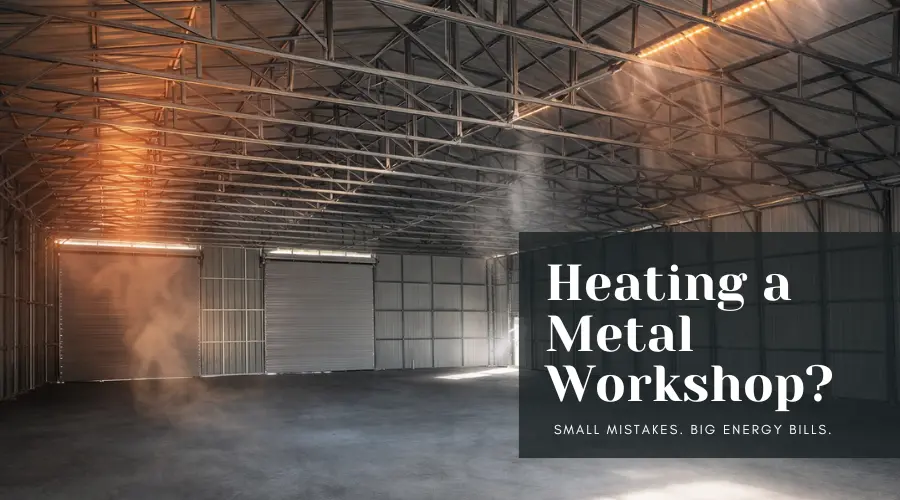
The Hidden Cost of Heating a Metal Workshop Incorrectly
Heating a metal workshop often seems simple until energy bills start rising. Many owners assume that installing a heater is enough, but steel buildings behave very differently from traditional structures. Heat moves faster, escapes quicker, and reacts strongly to design and installation choices.
What makes this problem worse is that most heating mistakes don’t show immediate results. Instead, they quietly increase monthly costs over time. We have discussed this issue in detail so that you don’t fall into the trap of the hidden heating costs. Our focus is on common mistakes, overlooked details, and smarter ways to control energy usage.
Why Heating a Metal Workshop Is Challenging
Metal workshop buildings are efficient in many ways, but when it comes to heating, they require extra planning. Steel conducts heat quickly, meaning warm air does not stay trapped inside unless the building is properly designed and insulated. This creates a situation where heating systems work harder but deliver less comfort.
Another challenge is scale. Steel workshop garages are often large, tall, and open. While this is ideal for machinery, vehicles, and storage, it increases the volume of air that needs to be heated. Without addressing airflow, insulation, and system sizing, even powerful heaters struggle to maintain stable temperatures.
These challenges explain why many owners feel their workshops are “never warm enough,” despite high energy bills.
How Heat Escapes from Metal Workshop Buildings
Heat loss is the silent reason behind most heating problems. It doesn’t happen in one place; it happens everywhere at once. And it is the reason that your space often becomes costly.
- Heat Loss Through Walls and Roof
Metal panels transfer heat rapidly. Without insulation, warmth passes straight through walls and roofs, especially during colder months. Moreover, the roof is the biggest problem area because warm air naturally rises. If the roof lacks proper insulation, a large portion of heated air escapes almost immediately after the heater turns on. Over time, this constant loss forces heating systems to run longer, increasing energy consumption without improving comfort. Three commonly used insulations are single, double, and woven R-17.
- Air Leaks Around Doors and Seams
Small gaps may seem harmless, but they add up quickly. Gaps around roll-up doors, personnel doors, wall seams, and roof joints allow warm air to leak continuously. In prefabricated workshops where doors are opened frequently, heat loss becomes even more severe. Many owners underestimate how much air escapes through these openings, yet sealing them is one of the easiest ways to reduce heating costs.
Why is Insulation Often Skipped?
Insulation is often delayed to reduce the upfront cost of the steel garage. However, skipping insulation almost guarantees higher heating bills later. An uninsulated metal workshop can lose more than half of its heated air in winter. It makes efficient heating nearly impossible. This leads directly into the most expensive heating mistakes.
Common Heating Mistakes That Increase Energy Bills
This section deserves extra attention because these mistakes are extremely common. If you know them beforehand, they are completely avoidable.
1. Choosing the Wrong Heater Size-
- Undersized Heaters:
When a heater is too small for a steel workshop, it runs continuously without reaching the desired temperature. This constant operation consumes energy while delivering little comfort. Over time, the system wears out faster, and energy bills climb steadily. Steel workshop owners often think the heater is “saving money” because it’s smaller, but in reality, it costs more to operate over the long term.
- Oversized Heaters:
Oversized heaters create short, intense heating cycles. The system heats the space quickly, then shuts off and turns back on shortly after. This frequent cycling wastes fuel, stresses components, and causes uneven temperatures. Proper heater sizing must account for square footage, ceiling height, insulation, and climate, not rough estimates.
2. Heating the Entire Workshop Instead of Specific Zones
- Why Full-Space Heating Is Inefficient
Many metal workshops are much larger than the area actually used daily. Heating the entire building when only a portion is active wastes energy every hour the system runs. This is especially common in steel repair shops, storage workshops, and hobby garages.
- Zone Heating as a Smarter Option
Zone heating focuses warmth only where work is happening. By heating specific areas instead of the whole workshop, owners reduce energy use while improving comfort. This approach answers a common buyer question: Is it necessary to heat the entire metal workshop? In most cases, the answer is no.
3. Ignoring Ceiling Height and Heat Stratification
- What Heat Stratification Means?
In tall steel workshops, warm air rises and stays near the ceiling. This creates a temperature difference where the upper portion of the building is warm, but the working level remains cold. Its crucial to understand because you need to be careful about a metal garage in extreme weather.
- How This Increases Bills?
Heat stratification increases bills because the heat never reaches floor level. And because of this, heaters run longer to compensate. Ceiling fans help push warm air downward, making the space feel warmer without increasing energy output.
4. Poor Thermostat Placement
- Common Placement Mistakes
Thermostats placed near doors, heaters, or drafty walls give false temperature readings. This causes the heating system to turn on and off unnecessarily. So, when you place the heater, ensure you are choosing the correct location.
- The Cost of Inaccurate Readings
Even inaccurate readings can increase the energy bills. Because then, it leads to wasted energy and uneven comfort. You just need to relocate a thermostat to improve heating efficiency significantly.
5. Relying on Portable or Temporary Heaters
Portable heaters seem affordable, but they consume high amounts of energy and heat unevenly. In large steel workshops, they rarely provide effective coverage. Over time, monthly energy bills from temporary heaters often exceed the cost of installing a proper heating system designed for metal buildings.
Insulation Issues That Quietly Raise Heating Costs
Insulation plays a much bigger role in heating a metal or steel workshop than most owners realize. Even a powerful heating system cannot perform well if the building fails to hold heat. Poor insulation forces heaters to work harder, run longer, and consume more energy without delivering real comfort.
Many heating problems that seem “system-related” are actually insulation problems in disguise. Understanding where insulation fails helps prevent long-term energy waste and unnecessary expenses.
Roof Insulation vs Wall Insulation
As you know already, without proper roof insulation, a large portion of heated air escapes through the ceiling. This causes heating systems to run continuously, increasing energy bills without improving comfort. Wall insulation supports roof insulation by slowing down heat transfer through exterior panels of your storage for a business startup. While roof insulation reduces upward heat loss, wall insulation prevents cold outdoor air from influencing indoor temperatures. When both work together, heating becomes more stable and efficient.
Key points to remember:
- Roof insulation prevents the fastest heat loss
- Wall insulation helps maintain steady temperatures
- Skipping either one increases heating demand
- Balanced insulation improves comfort at working height
Heating Smart Costs Less Than Heating More
Heating mistakes in a metal workshop don’t fail loudly; they fail slowly through rising bills and poor comfort. Most problems come from heat loss, poor system sizing, and inefficient heating habits. With better planning and smarter choices, steel workshops can be warm, efficient, and affordable to operate long-term. If you still have any queries, call the experts at (336)-914-1654 and ask your queries. Your queries can be related to steel building types, buying steps, prices, customization, and, obviously, insulation.
 (336)-914-1654